
K. Jahangir
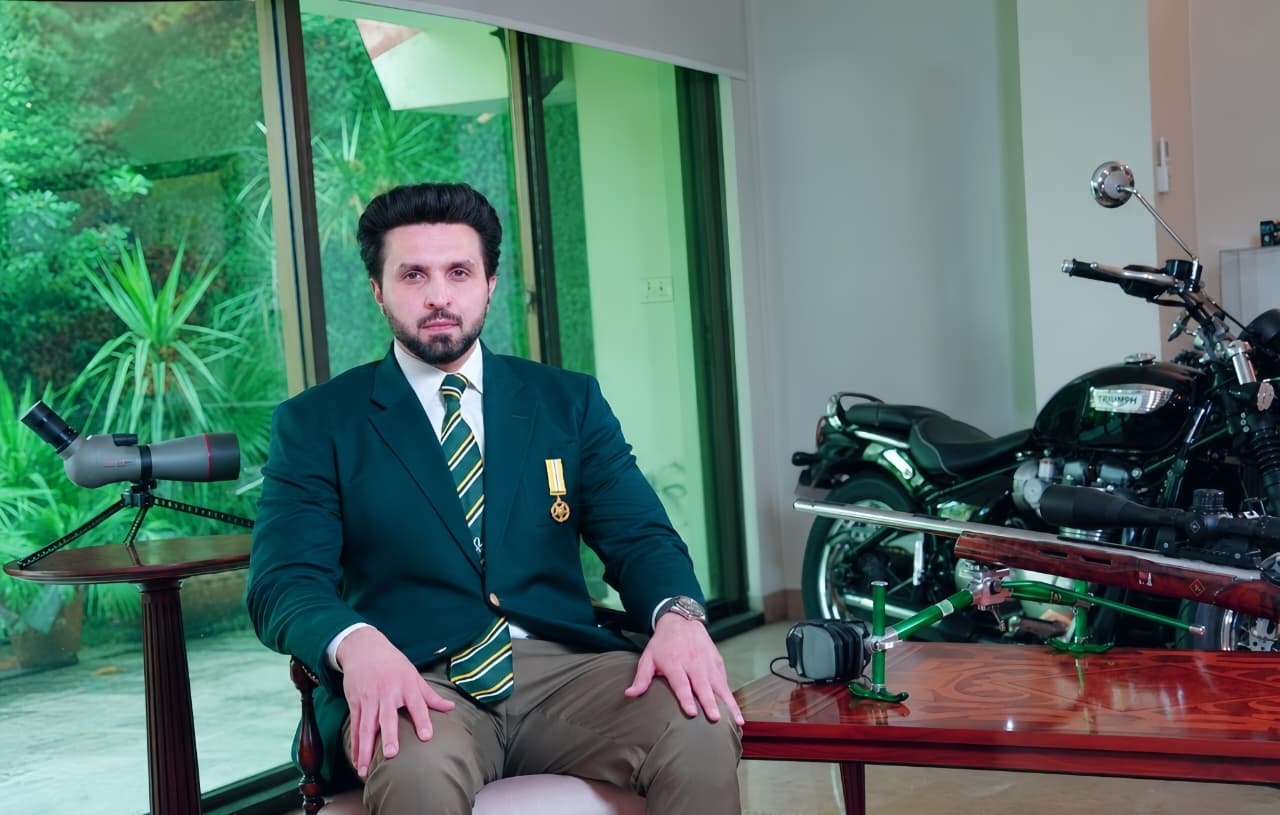
In Pakistan’s sporting landscape, success stories are often celebrated as individual achievements. Yet behind every medal, title and international appearance lies a broader ecosystem of support, planning and institutional commitment. The recent remarks of decorated marksman and Tamgha-e-Imtiaz recipient Mohsin Nawaz serve as a timely reminder that sustainable sporting excellence is rarely the product of individual talent alone.
Having earned one of Pakistan’s highest civilian honours, Nawaz chose not to focus solely on personal accomplishment. Instead, he directed attention toward the institutions and stakeholders he believes have played a pivotal role in creating opportunities for athletes in a discipline that has long remained on the fringes of mainstream sport.
His decision to dedicate the Tamgha-e-Imtiaz to Pakistan Long Range Rifle Association (PLRA) Patron-in-Chief Field Marshal Syed Asim Munir carries significance beyond symbolism. It reflects a broader narrative about the importance of leadership, infrastructure and institutional ownership in transforming niche sports into competitive national pursuits.
For decades, shooting sports in Pakistan have struggled to gain visibility despite producing talented athletes capable of competing internationally. Unlike cricket, hockey or even emerging sports such as squash and martial arts, shooting has often lacked the structured pathways necessary for sustained growth. The absence of formal development programmes, modern facilities and international affiliations created barriers that prevented many gifted shooters from reaching their full potential. That reality, according to Nawaz, is gradually changing.
One of the most significant developments has been the emergence of a more organised framework supported by state institutions, the Pakistan Sports Board and relevant government departments. Such support has helped provide legitimacy to the sport while creating mechanisms through which athletes can compete internationally under Pakistan’s banner.
The establishment and development of the Pakistan Long Range Rifle Association represents an important milestone in this process. By securing affiliation with the International Confederation of Fullbore Rifle Associations (ICFRA), Pakistan achieved formal representation in long-range rifle shooting at the global level. More importantly, the affiliation created a recognised pathway for athletes who previously had limited opportunities to participate in international competitions through an organised national structure.
This may appear administrative in nature, but in modern sport, governance and recognition often determine whether talent remains hidden or is transformed into achievement.
Nawaz understands this reality perhaps better than most. With ten individual international medals to his name and competitive experience spanning more than two decades, he has witnessed both the challenges and possibilities associated with the sport. Having represented Pakistan in competitions across the United Kingdom, the United States and South Africa, he has observed first-hand how leading nations invest in athlete development, coaching systems and specialised facilities. His assessment is both realistic and optimistic.
Pakistan, he believes, remains behind many of the world’s established shooting powers. However, he is equally convinced that the country possesses the talent, determination and raw potential required to close that gap. What remains essential is continuity in support, investment and strategic planning.
The global evolution of long-range precision shooting underscores this point. Around the world, the discipline has become increasingly professionalised, supported by advanced training academies, sports science, performance analytics and comprehensive athlete development programmes. Nations that consistently produce champions do so because excellence is cultivated through systems rather than left to chance.
Pakistan now faces a critical opportunity. The foundations are beginning to emerge, but foundations alone do not create champions. Long-term commitment is required to transform early progress into lasting success.
Nawaz’s emphasis on institutional collaboration is therefore particularly relevant. His belief that organisations such as the Pakistan Army can contribute to athlete development is rooted in the values that define elite shooting: discipline, precision, mental resilience and professionalism. These qualities are essential in a sport where victory is often determined by the smallest margins and where psychological strength can be as important as physical preparation.
Indeed, shooting remains one of the most demanding competitive disciplines in the world. It requires extraordinary concentration, emotional control and countless hours of repetitive training. Success cannot be improvised. It must be developed methodically over years. Perhaps the most encouraging aspect of Nawaz’s vision, however, lies beyond his own competitive ambitions. Rather than viewing his achievements as a personal destination, he sees them as a platform from which to support the next generation.
His commitment to mentoring young athletes reflects an understanding that sporting success becomes truly meaningful when it creates opportunities for others. Pakistan is home to many aspiring shooters who possess the passion and potential to compete internationally but require guidance, exposure and structured development. Experienced athletes like Nawaz can play an invaluable role in bridging that gap.
The significance of the Tamgha-e-Imtiaz, therefore, extends beyond recognition of past achievements. It also represents responsibility. In Nawaz’s view, national honours carry an obligation to serve, inspire and contribute to the growth of future talent. That perspective deserves attention.
Pakistan’s sports sector often focuses on celebrating victories after they occur. The greater challenge lies in creating the conditions that make those victories possible in the first place. Shooting sports provide a compelling case study of how institutional support, strategic leadership and athlete development can work together to unlock untapped potential.
The journey remains in its early stages. Significant challenges still exist, and international competitiveness cannot be achieved overnight. Yet the progress already made demonstrates what becomes possible when talent is supported by structure and ambition is matched by opportunity.
As Pakistan looks toward the future, the question is no longer whether the country can produce world-class shooters. The more important question is whether it can sustain the momentum necessary to nurture and develop them. If the current trajectory continues, the answer may well be found on podiums around the world in the years ahead.
 English