
K. Jahangir
There comes a moment in the life of every stagnating institution when “survival” is no longer a respectable goal. When the comfort of dependency becomes a cage, and the only way out is a radical, almost violent, shift toward self-reliance. For Pakistan football, that moment of reckoning has arrived.
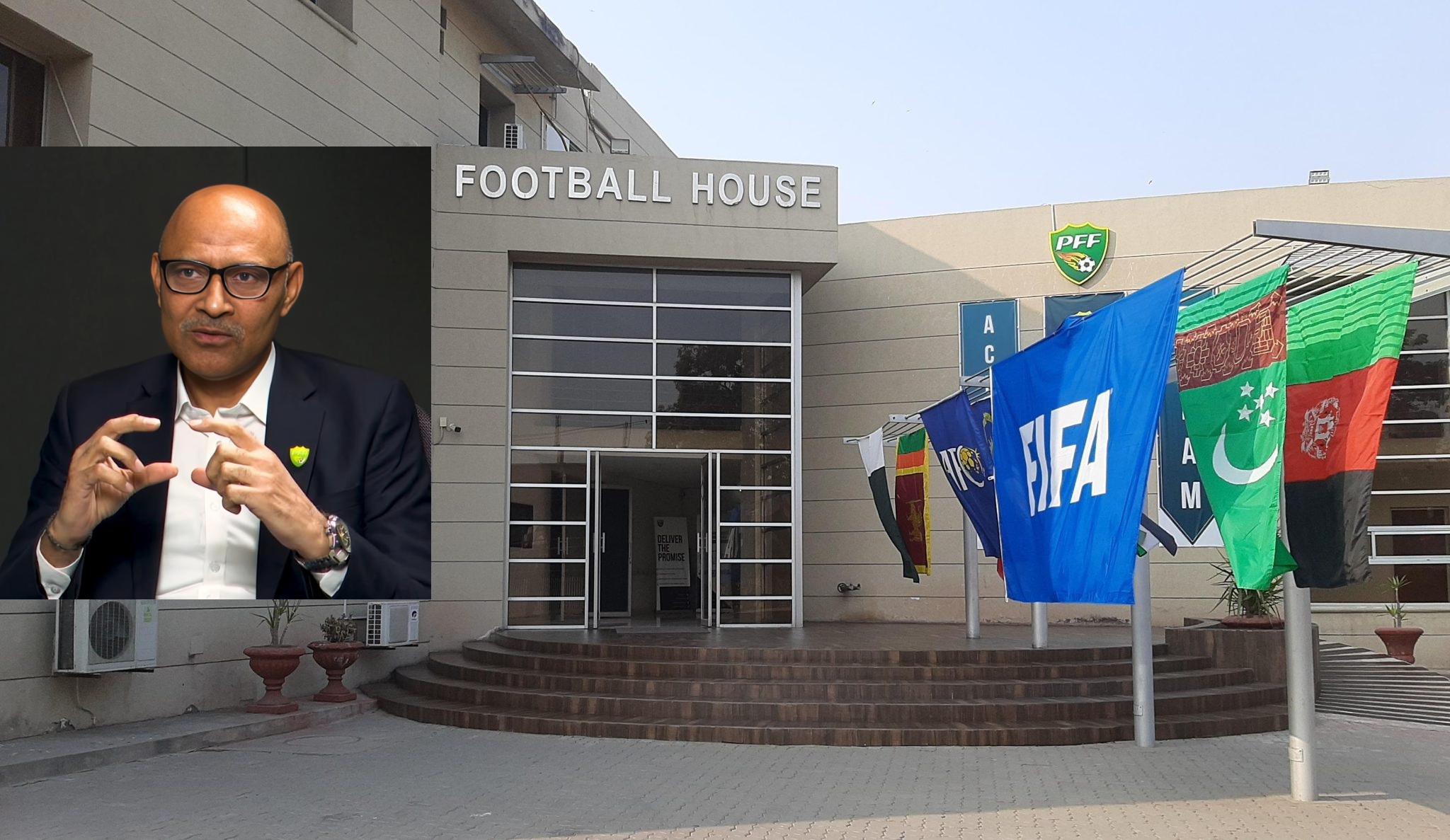
The recent discourse from Shahid Niaz Khokhar, the PFF’s Chief Operating Officer, isn’t just another administrative update; it is a philosophical manifesto. The message is blunt: Pakistan football can no longer afford to live on borrowed oxygen.
The Mirage of the FIFA Lifeline
For decades, the federation has existed in a state of artificial respiration, sustained by FIFA’s financial drips. This aid ensured the lights stayed on, but it never guaranteed that anyone was home. Khokhar’s candid admission—labeling FIFA funding as mere “kick-off money”—is a refreshing, if overdue, bit of truth-telling.
External aid can sustain an office, but it cannot build a footballing nation. We have long mistaken operational comfort for growth. A football ecosystem isn’t a charity project; it’s a marketplace. It requires investment, not just allowances. Khokhar’s push for financial independence isn’t just a reform—it is an existential necessity.
The League: A Marketplace, Not a Mirage
At the heart of this “New Deal” is the promised resurrection of the Pakistan Premier League. But let us be brutally honest: the Pakistani sports landscape is littered with the corpses of leagues announced with fanfare and buried in silence.
A credible domestic league is more than twenty-two men chasing a ball; it is a marketplace of talent. It is the hook for broadcasters and the sanctuary for sponsors. Talent in Pakistan—from the dust-blown pitches of Lyari to the rugged heights of Chitral—is abundant, but it is currently invisible.
The PFF’s pursuit of local corporate backing is a step in the right direction, but they must remember: Sponsorship follows structure. Brands do not invest in “intent”; they invest in visibility and reliability. The PFF must first build a product that is worth the corporate ink.
The Geopolitical Gamble
Khokhar’s nod to the friction of regional politics touches a familiar nerve. Football, the “beautiful game,” is too often the first casualty of ugly diplomacy. Yet, within this frustration lies a commercial goldmine.
The prospect of an India-Pakistan football rivalry isn’t just romantic—it is transformative. Cricket has proven that a border-clash is the ultimate currency. If given neutral ground and professional management, a South Asian football circuit involving Bangladesh and Afghanistan could turn a dormant region into a vibrant, marketable powerhouse. But this requires more than just hope; it requires a diplomatic masterstroke.
The Infrastructure Elephant in the Room
One of the most pragmatic notes in Khokhar’s vision is the admission regarding government support. While operational autonomy is a noble goal, expecting a federation to build stadiums and elite academies without the State is a fantasy.
The challenge isn’t if the government should be involved, but how. We need transparent public-private partnerships that accelerate infrastructure development without shackling the sport to the whims of political appointees.
Verdict: Strategy Over Sympathy
Pakistan football does not suffer from a lack of ideas—it suffers from a chronic allergy to execution. Announcing a league is the easy part; sustaining it through a second season is where the real work begins.
Khokhar’s vision is bold, and for the first time in a generation, the conversation is moving in the right direction. But the ghosts of past failures still haunt the halls of the PFF.
The stakes are clear: Football in Pakistan doesn’t need our sympathy. It doesn’t need another “plan.” It needs a strategy that outlives its authors. Will this be the beginning of a sovereign era, or just another glossy chapter in a book of broken promises? The clock is ticking, and the pitch is waiting.
 English